
Essays & Features
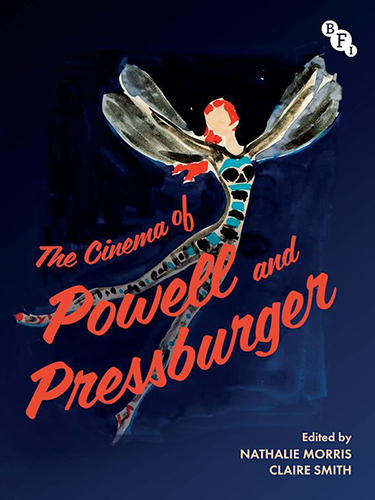
A chapter in The Cinema of Powell and Pressburger, ed. Nathalie Morris and Claire Smith, Bloomsbury, 2023
“…Chaucer doesn’t seem to have been fussed about getting his pilgrims to Canterbury; he left off his book and left them all still on the road, walking and story-telling without end. Powell and Pressburger take their travellers onwards to the cathedral. Alison’s hallowed place is less the soaring vaults than a caravan dustily stored at a garage across town, precious reminder of a perfect holiday spent with her fiancé before he went to war. For Peter, the moment of arrival comes when he sits at the cathedral organ after years plying his trade on cinema Wurlitzers; as he begins Bach’s Toccata and Fugue in D Minor, the divergent worlds of cinema and cathedral are united.”
An essay in What Is It That Will Last? The Land and Tidal Art of Julie Brook, Lund Humphries, 2023. https://www.lundhumphries.com/products/what-is-it-that-will-last
“…She gets as close as possible to living with, even living in, the materials she wants to work with, sleeping on the sand she will use in ‘desert drawings’, setting up home by the rocky shore where she will build a cairn, or following yellow ochre back to where the land is made of it, in the quarries of Komatsu. She is drawn to people who live in intimate partnership with the resources they use. She might not understand the resistance of the speaker in Shakespeare’s sonnet 111 to what shapes or stains him: ‘Almost thence my nature is subdued / To what it works in, like the dyer’s hand’. Brook’s own nature is liable to be enlivened by what it works in. And she is admiring of dyers’ hands.”
Birmingham.ac.uk, January 2023
“…Presents were given at New Year in early modern England, a custom that continued until 25 December became the firm focus for Victorian celebrations. New Year poems were often composed as gifts, especially to patrons: addressed to one person in particular, even when widely shared. Some writers, understanding the season as one of purgings and resolutions, portrayed the ideal beings their recipients might become. John Donne invoked God as tutor in his searing poem to Lucy, Countess of Bedford (‘He will best teach you how you should lay out / Your stock of beauty, learning, favour, blood’) though it was the poet who was directing their intimate course towards the ‘private gospel’ of salvation, a New Year marriage of time and eternity.”
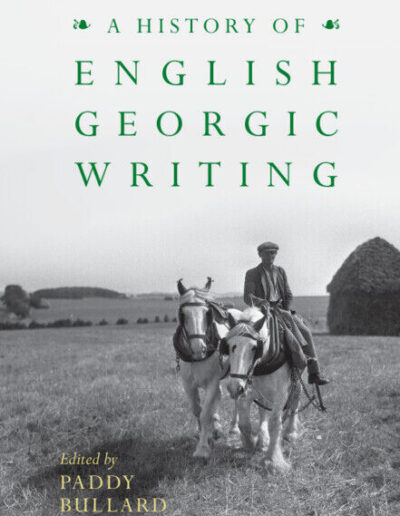
A History of English Georgic Writing, ed. Paddy Bullard, Cambridge University Press, 2022, pp. 57-78.
“…In the Georgics things can ‘turn’ unexpectedly into other things. Most astonishingly the solid innards of an ox can liquify and then send swarms of bees flying into the sky. The trudging beast of the plough has metamorphosed into something airborne. Releasing himself from calendar instruction into mythic story-telling, and from soil into air, Virgil asserts a degree of creative freedom that English georgic writers would not often claim for themselves. Yet much of the power of their work, like his, will lie in its fusion of rhythmically predictable and newly imagined turns in the wheel of the year.’
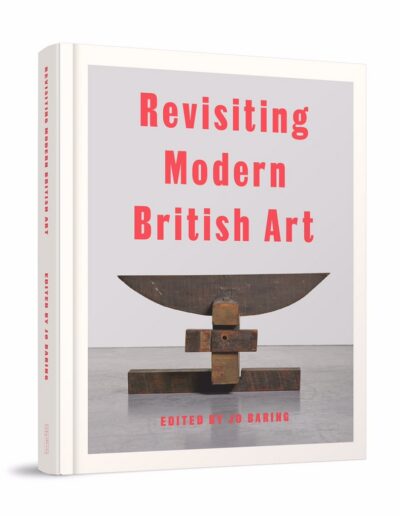
Revisiting Modern British Art, ed. Jo Baring, Lund Humphries/Ingram Collection, 2022, pp. 25-34.
https://www.lundhumphries.com/products/revisiting-modern-british-art
“…’Ford Madox Ford’s great novel about the immediate postwar period is Last Post (1928) and at its centre is a man lying on a bed in a garden. It’s not clear what exactly is wrong with him. This recumbent figure is the brother of Christopher Tietjens, the Christ-like, burden-bearing soldier-hero of the Parades End tetralogy of which Last Post is the peculiar, static, sidelong final part. Ford is suggestively unclear about the relationship between the brothers. Are they, in some symbolic sense, one person, who both lives and dies in the aftermath of the war?
“Stanley Spencer was always ready for the stirring of new life. He was in this sense the opposite of T.S. Eliot who begins The Waste Land with such apprehension. He saw forms of resurrection all around him and moved straight towards them. He amplified and rejoiced in every hint of a sleeping thing coming to wakefulness. Resurrection is the central subject of his postwar work, and not only a subject but a physical force that animates almost every scene and body. It does not chafe and pain, but imbues his people with confidence and ease of movement.”
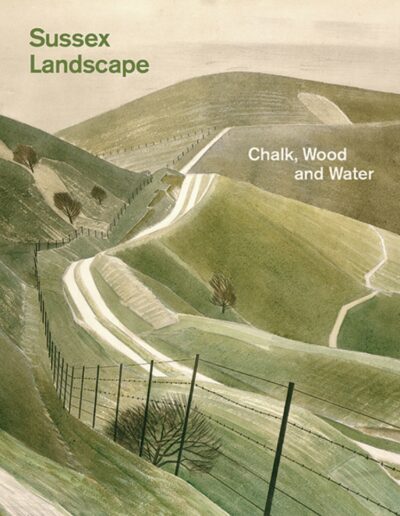
‘Chalk’ in Sussex Landscape: Chalk, Wood, and Water, ed. Simon Martin, Yale University Press / Pallant House, 2022.
More from Alexandra
On Woolf
Secret Life of Books podcast on the The Waves
'Woolf in Winter', a published lecture on seasons, rituals, ice and love.
'A Walk of One's Own', four radio programmes following Woolf on foot.
On artists
Ashmolean NOW exhibition from November 2026: Samuel Palmer and Garry Fabian Miller. My catalogue essay is called 'Magic Circles'.
Art, War, and Resurrection. An essay for Revisiting Modern British Art, ed. by Jo Baring. This work on 'resurrection' grew from thinking about illness, revival, and not getting better.
On history
A rural history classic from Virago: I introduce a new edition of Mary Chamberlain's Fenwomen, now reissued in a 50th anniversary edition.