
Essays & Features
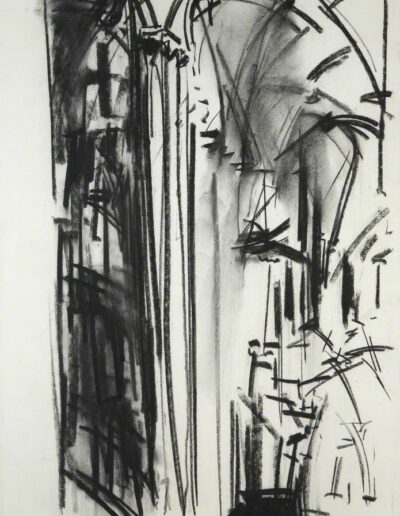
My essay on the art of Dennis Creffield (1931-2018) introduces the catalogue of a retrospective exhibition at his gallery, Waterhouse & Dodd, 47 Albermarle Street, London.
“He drew himself as Nelson, he pitched himself into the sea-storms inhabited by Turner, he dreamt and prayed his way into the Annunciation and Nativity. His infants are already wise and he paints Shakespeare and Blake as if, with all their wisdom, they are embryonic.”
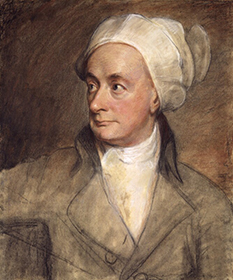
In The Cowper and Newton Journal, special issue on ‘William Cowper At Home and Away’, vol 8: June 2018.
This essay asks what happened when the poet famous for his acute feelings about home left his familiar surroundings in 1792 to spend six weeks at Eartham in the South Downs.
‘How should I who have not journey’d 20 miles from home these 20 years, how should I possibly reach your country?’ This was Cowper’s response in the spring of 1792 when his new correspondent William Hayley invited him to stay in Sussex.’
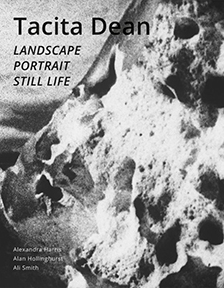
In Tacita Dean: Landscape, Portrait, Still Life, Royal Academy of Arts, 2018.
https://shop.royalacademy.org.uk/tacita-dean-landscape-portrait-still-life
“…Dean’s interest in superstition is often the prompt for days and weeks of looking, and it may be that the magic is in the observation. The four- and five-leaf clovers, of which she has an impressive collection, are spoils hard-won from many miles of grass. These are found objects like Nash’s ‘personages’; perhaps clovers appear to Dean as personages announced themselves to Nash. But the vitrine of clovers proudly displayed is a record of Dean’s patient looking, as much as it is a shrine to lucky chance.”
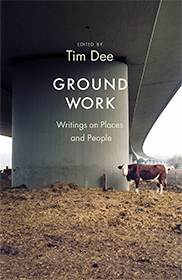
In Ground Work: Writings on People and Places, ed. Tim Dee, Jonathan Cape, 2018.
https://www.penguin.co.uk/books/432863/ground-work-by-tim-dee/978178470346
“As an adult, then, I became a visitor to this part of Sussex where the Arun cuts through the chalk. What had been background became foreground. The Downs acquired names and were sorted into scarp slopes and dip slopes. ‘The path on the bank’ became the Greensand Way. I sat making notes in churches, then put my coins in the slot for all the leaflets available, and postcards too. If there were no leaflets in the marked place on top of the prayer-book shelf by the door, I trespassed anxiously behind vestry curtains for further supplies…”
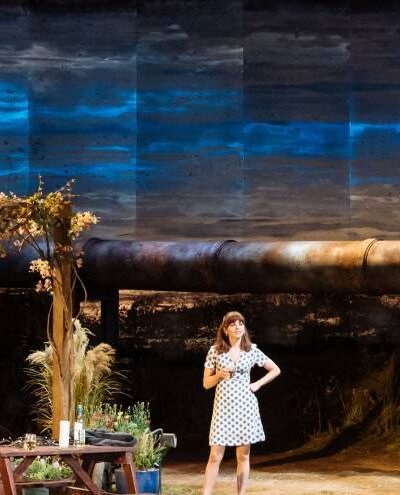
Programme essay for Nightfall at the Bridge Theatre, London, 2018.
“In a series of frankly compassionate plays and two brave, expansive novels, Barney Norris has asked ‘who’s here?’ and ‘what do they feel about it?’ An ageing husband and wife in Visitors (2014) approach the end of 40 years spent together in a farmhouse on the edge of Salisbury Plain. Their lives have been rooted in this place and in their commitment to each other. They are still in love, though dementia makes it hard to find the words and the farm they made will soon be sold. Norris raised the funds for Visitors while working in a pub, and the community of that pub became the inspiration for Eventide (2015). This play, too, is about a kind of fierce, loving, local coherence that is disappearing.”
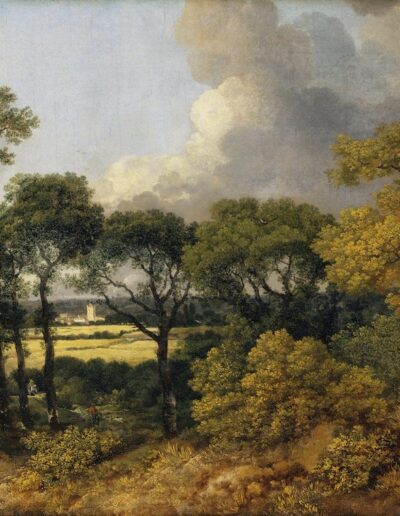
Tate Etc., September 2017.
From laden apple trees to yellowing leaves, autumn – ‘the painter’s season’ – has inspired generations of aritsts and writers.
More from Alexandra
On Woolf
Secret Life of Books podcast on the The Waves
'Woolf in Winter', a published lecture on seasons, rituals, ice and love.
'A Walk of One's Own', four radio programmes following Woolf on foot.
On artists
Ashmolean NOW exhibition from November 2026: Samuel Palmer and Garry Fabian Miller. My catalogue essay is called 'Magic Circles'.
Art, War, and Resurrection. An essay for Revisiting Modern British Art, ed. by Jo Baring. This work on 'resurrection' grew from thinking about illness, revival, and not getting better.
On history
A rural history classic from Virago: I introduce a new edition of Mary Chamberlain's Fenwomen, now reissued in a 50th anniversary edition.